TOP

Stryker’s Run


This is the final game that I know of which was done by Chris Roberts before moving to the USA although I have heard that he worked on several others for Superior Software. He had left Ocean at this point having apparently had serious issues getting paid for his work and was quoted in a Superior Software recruiting campaign as saying :-

“I used to work for another software house, and I never got to speak to any of the directors nor anyone with any major influence within the company. At Superior Software, I deal directly with the Managing Director. Perhaps more importantly, just six weeks after the release of Stryker’s Run I received my first royalty cheque which amounted to more than £5000, whereas obtaining my royalties due from the other company was like getting blood out of a stone; it took several months of nagging and chasing before they paid me the money they owed me.”
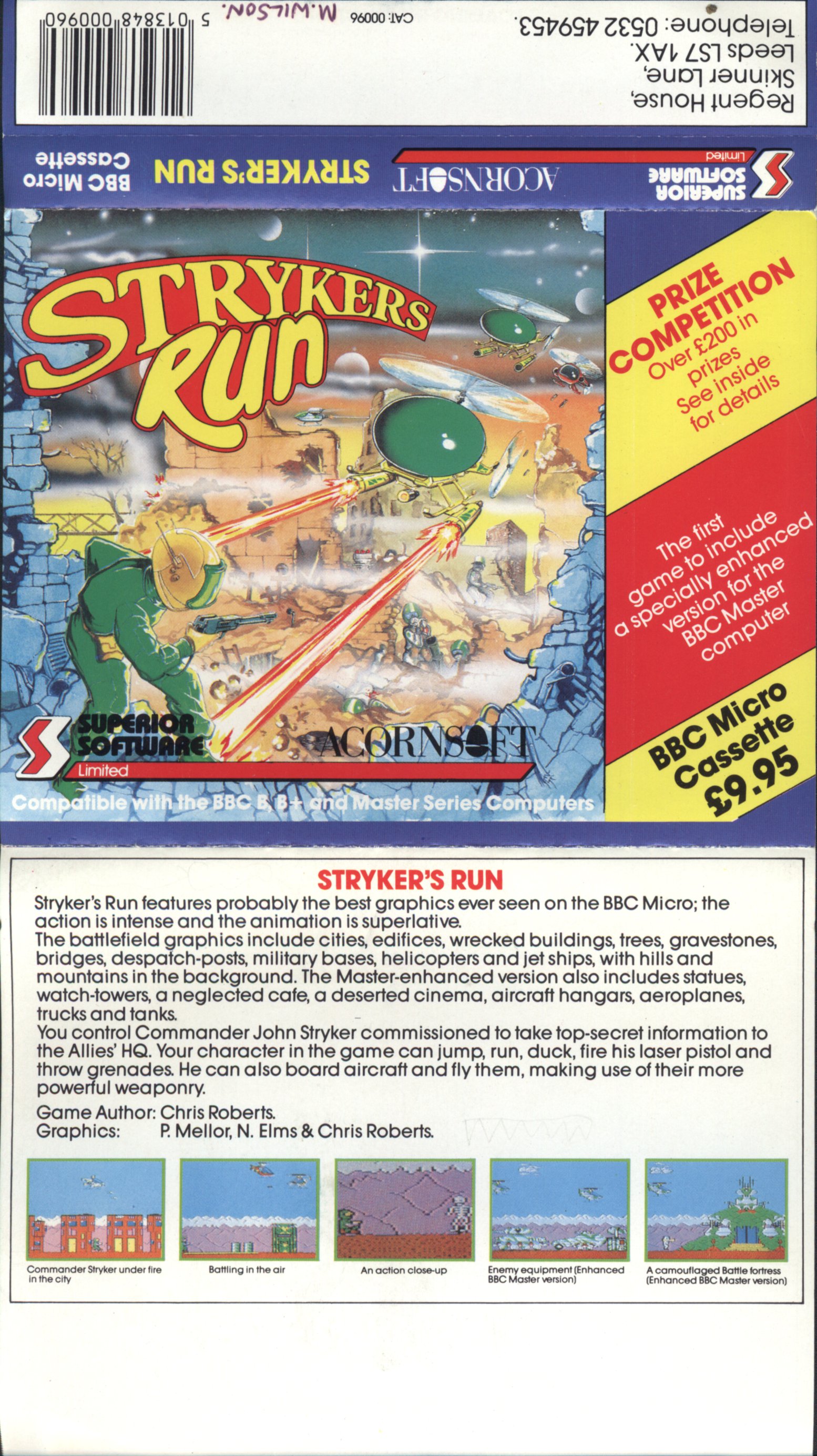
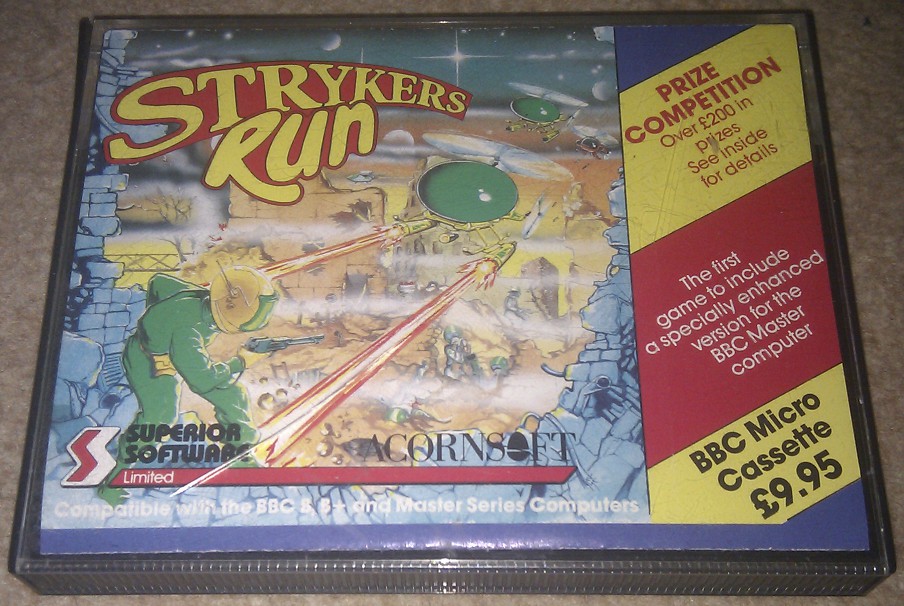
Strykers Run was published by Superior Software in 1986 and according to the scrolling text at the start of the game it took 10 months to write. It came packaged with both a regular version for 32K machines and an enhanced version for the Master 128 and claims to be the first game to do this. A visitor to the site last week knew Roberts at the time and mentioned that he borrowed his Dad’s Master to create the enhanced version.

The cassette version of the game which I’ve got has the 128K version on one side and the regular 32K on the other. I did of course pick the enhanced version given the choice. This has some excellent title music by Martin Galway, far more background graphics, a high score table and you get tanks to drive occasionally but it is basically the same gameplay other than the tanks.
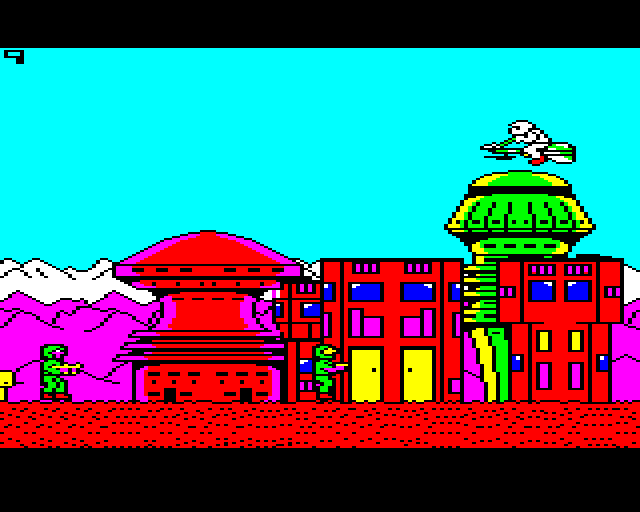
The game is a side scrolling shooter and the story, such as it is, has you playing Commander Stryker who must deliver his information to the enemy HQ. The gameplay is fairly basic with no platforms to jump on, ladders to climb, etc.. You simply run along trying to shoot everything and avoid being hit. The enemies consist of various soldiers, some armed with pistols, others with rocket launchers or machine guns + various flying vehicles which bomb you from above.

Stryker has two weapons (a gun and grenades) both of which have infinite ammo. He can survive 9 hits but there are no lives making the game fairly tricky. It’s all too easy to get caught in a barrage of bombs and get all your hit points wiped out in seconds. It is more forgiving than Wizadore however, with the main problems here being finding gaps in the bombardments from enemy helicopters.

One of the novelties in the game is the ability to drive vehicles you find along the way. These include helicopters, planes and tanks and they can speed you through the world if you can avoid being blown up by all the opposition. The fuel in these runs out in next to no time though, so it’s only a short term help.
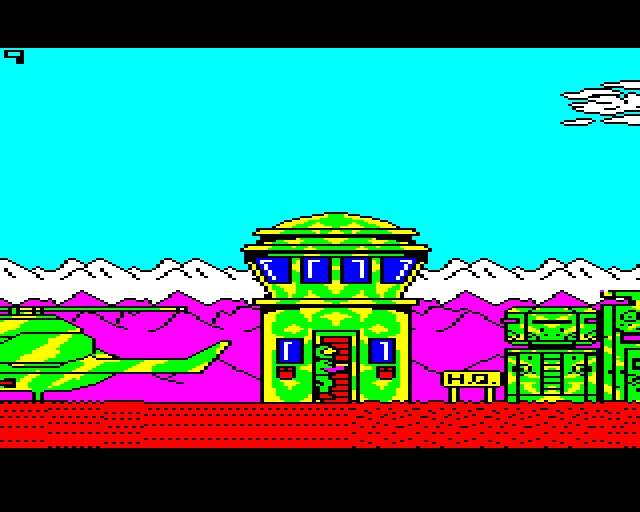
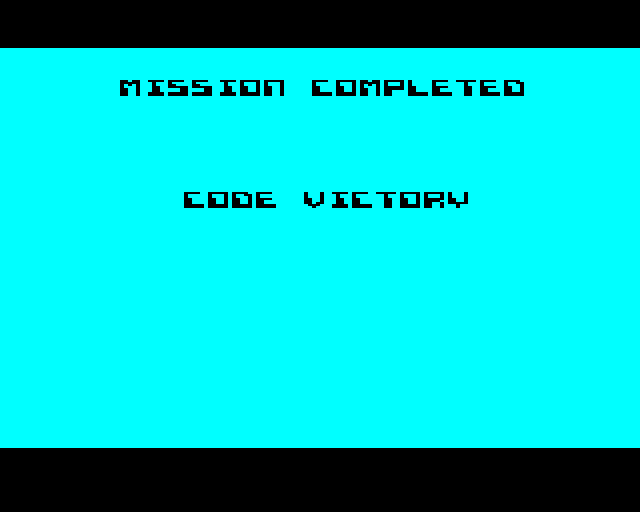
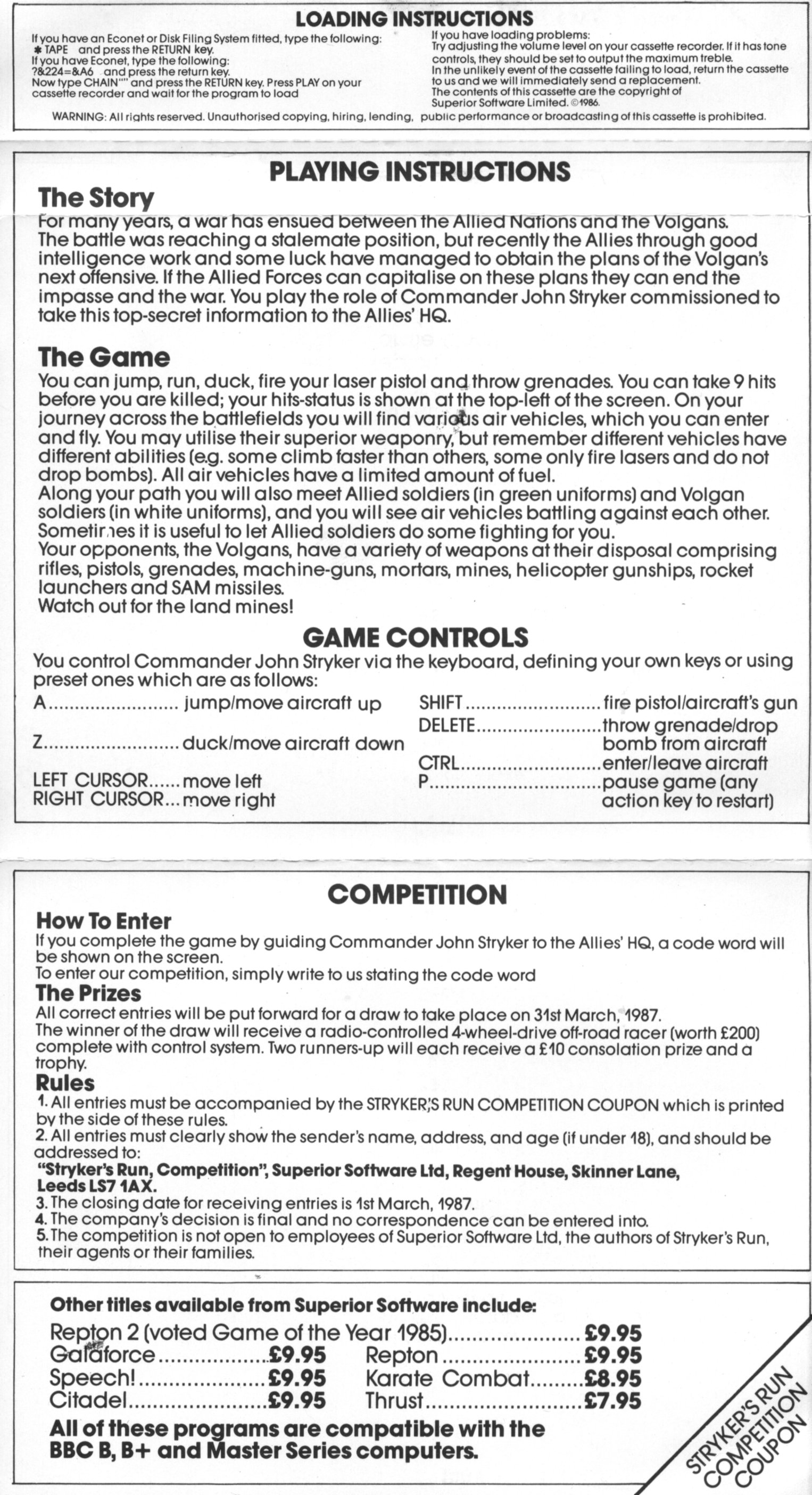
If you travel to the right for long enough and can stay alive, you finally reach the HQ and get the codeword. This was another game which offered a prize to anyone completing it and you could fill in the form on the inlay with this word and enter a prize draw.

Visually this game looks great for it’s day and I can see why it would have created a stir at the time. The backgrounds are impressively varied for a 1986 game and the gameplay itself isn’t bad at all, although you would need a strong dose of nostalgia to say it stands the test of time. It isn’t a million miles away from Times Of Lore in some ways and it’s easy to see how one could have led to the other.

There was a sequel to Strykers Run called Codename: Droid which came out in 1987 but as far as I know Roberts didn’t work on that one himself.

TOP

Match Day

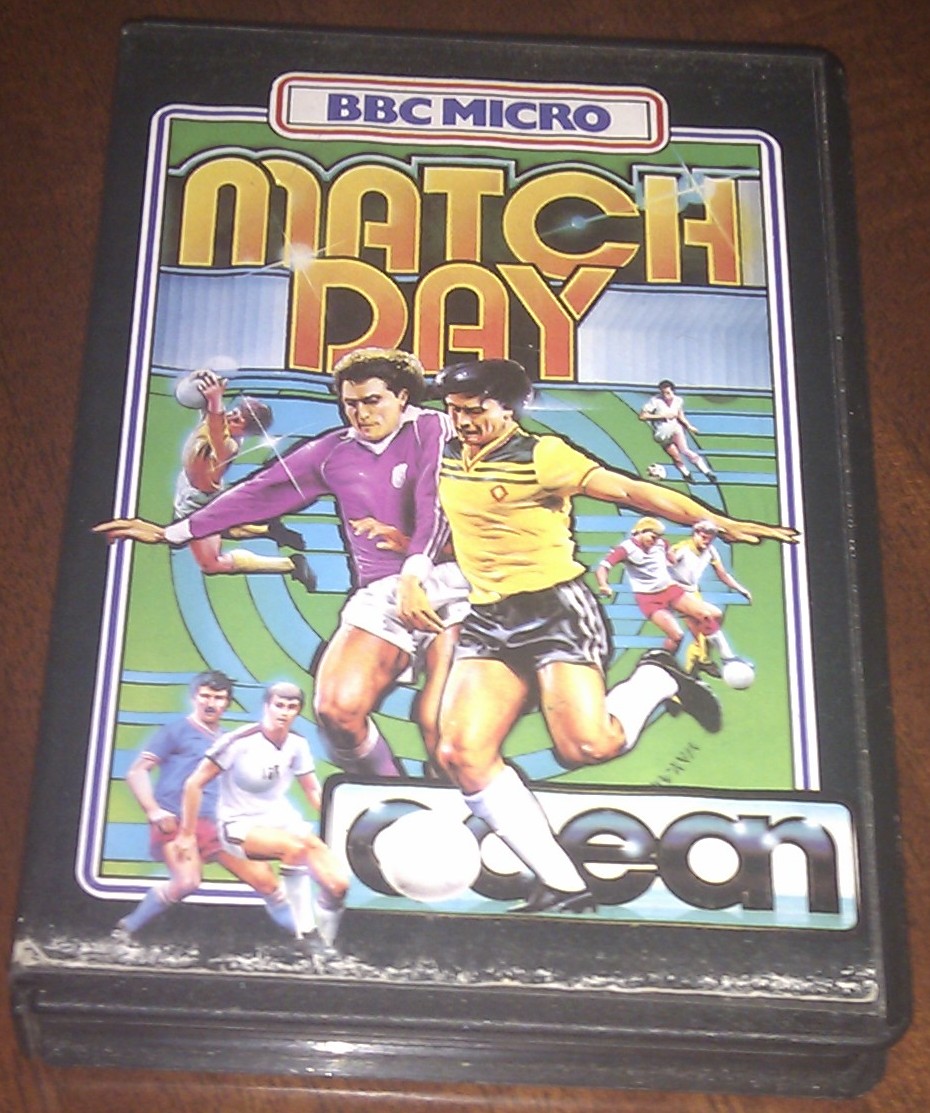
This was Chris Roberts’ second game for Ocean (who owned Imagine) on the BBC. Match Day was a massive game in its day leading to Ocean wanting to get it onto as many platforms as possible. Having just brought them a bestselling game for the BBC, Roberts must have seemed like the obvious choice for the job of porting it to the system. I know Martin Galway worked on the C-64 port so he may have been an influence also.

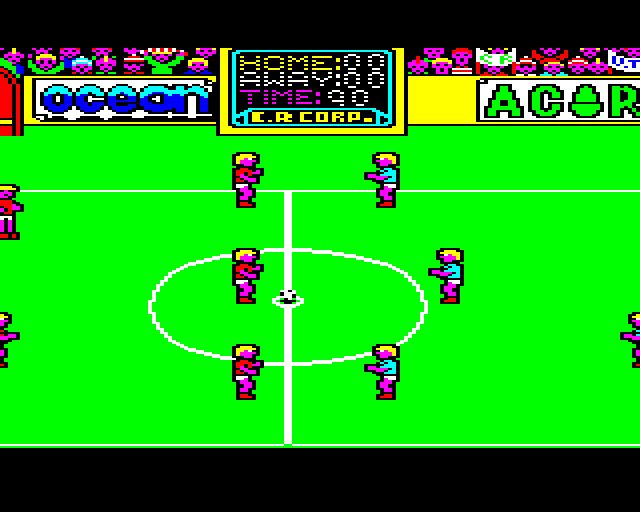
Match Day is a simple arcade football game. I’ve played it previously on the Spectrum and also seen the Amstrad CPC version so I’ve got something to compare against this time. The first thing I notice is that the BBC port has no cup competition to enter, no settings to alter the match length and not even any team names. It is literally just a one off game. It does have a two player option at least.

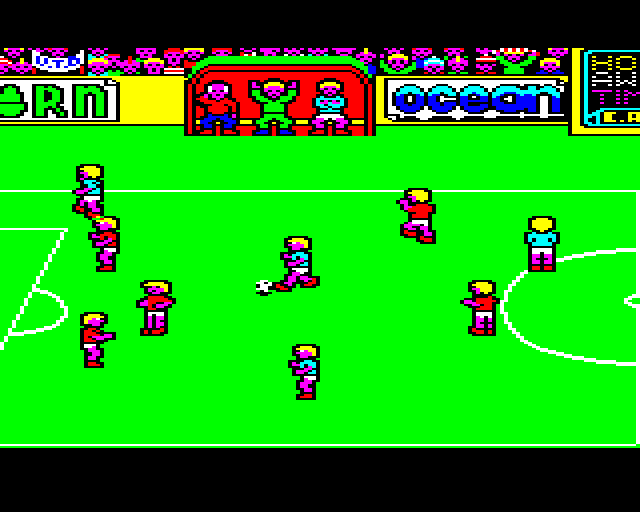
The game starts with a jaunty rendition of the Match Of The Day theme music before kick off. This is a truly simplified version of football with less than 11 men a side and only one fire button used to kick the ball. This kick lofts the ball into the air no matter what so it isn’t possible to pass the ball in the conventional sense. If the ball bumps into another player anywhere other than at their feet it bounce soff them as though they were a brick wall.

In the Spectrum version, it was possible to walk down the pitch bouncing the ball on one players head in this manner and no one could tackle you while you walked the ball into the net. That doesn’t seem to be possible here at least.

Once you have the ball at your feet, it sticks there as if glued although it can be tricky to keep hold of it with the constant harassing from the other side. Scoring a goal appears to be just a case of kicking the ball between the posts with enough power to cross the line. The goalkeepers in this game are no more than a third goalpost and rarely move other than to dive out of the way of a shot aimed straight at them. Because the ball is always lofted when kicking, long shots work better than those close to the goal.

This isn’t a game that has held up too well. The main thing that strikes me is how slow it is. I ended up putting the emulator onto 2x speed to get it up to the tempo it feels like it should be going at. This speed issue was far from unique to the BBC though. The Spectrum version was possibly a little faster but it was extremely ugly by comparison. As for the Amstrad CPC version, it had similar graphics but the speed was far worse than this and all but unplayable.

Comparing it to those other versions, this is a decent port but there is no way I could recommend this game to anyone. It’s one of those titles that you look back at and wonder why on earth we all spent so much time on it.

TOP

Wizadore

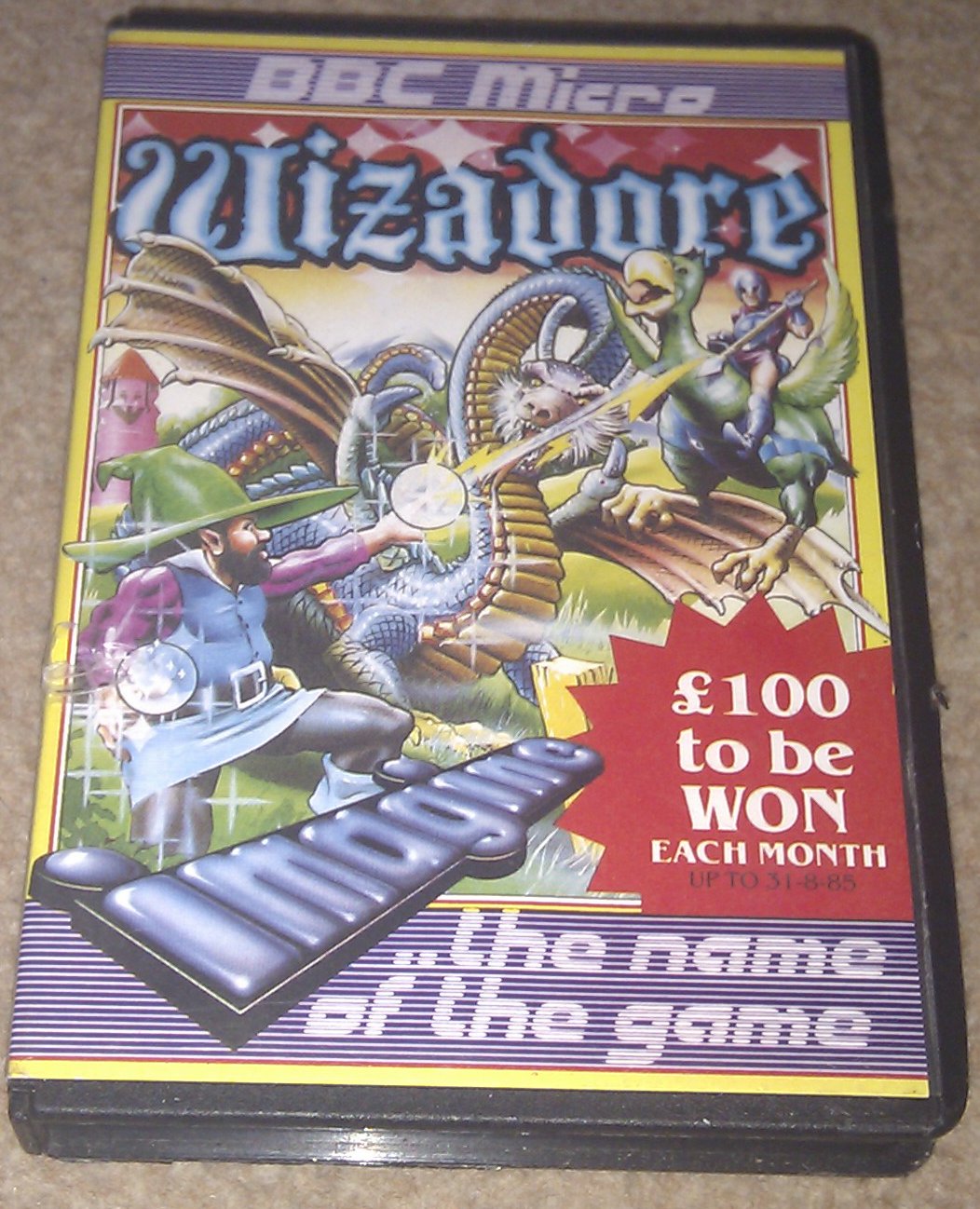
Wizadore was Chris Roberts’ first commercially sold game outside of magazines and was published by Imagine in 1985. Roberts got the publishing contract via Martin Galway, who should be a familiar name to most retrogamers. Galway went to the the same school as Roberts and although they didn’t get on at the time, they ended up working together on numerous games together afterwards. This continued for years with Galway working at times for Origin on games such as Times Of Lore and Wing Commander 3. He is probably most famous though for producing some of the best music on the Commodore 64′s SID chip.

Roberts originally attempted to get Wizadore published by Ultimate (who would later became Rare) having made the game in his own time. The main problem was that the BBC wasn’t seen as a games machine and was primarily used in schools, with the far cheaper Spectrum and C64 being the two major players in home gaming in the UK. At this time, Galway was working for Ocean who were trying to launch the Imagine brand. Imagine only had one half finished game and Galway managed to persuade them to publish Wizadore to expand the range. This gave Roberts his major break into the industry at the age of 16. It went on to be a bestseller and led to more work writing the BBC conversion of Match Day.

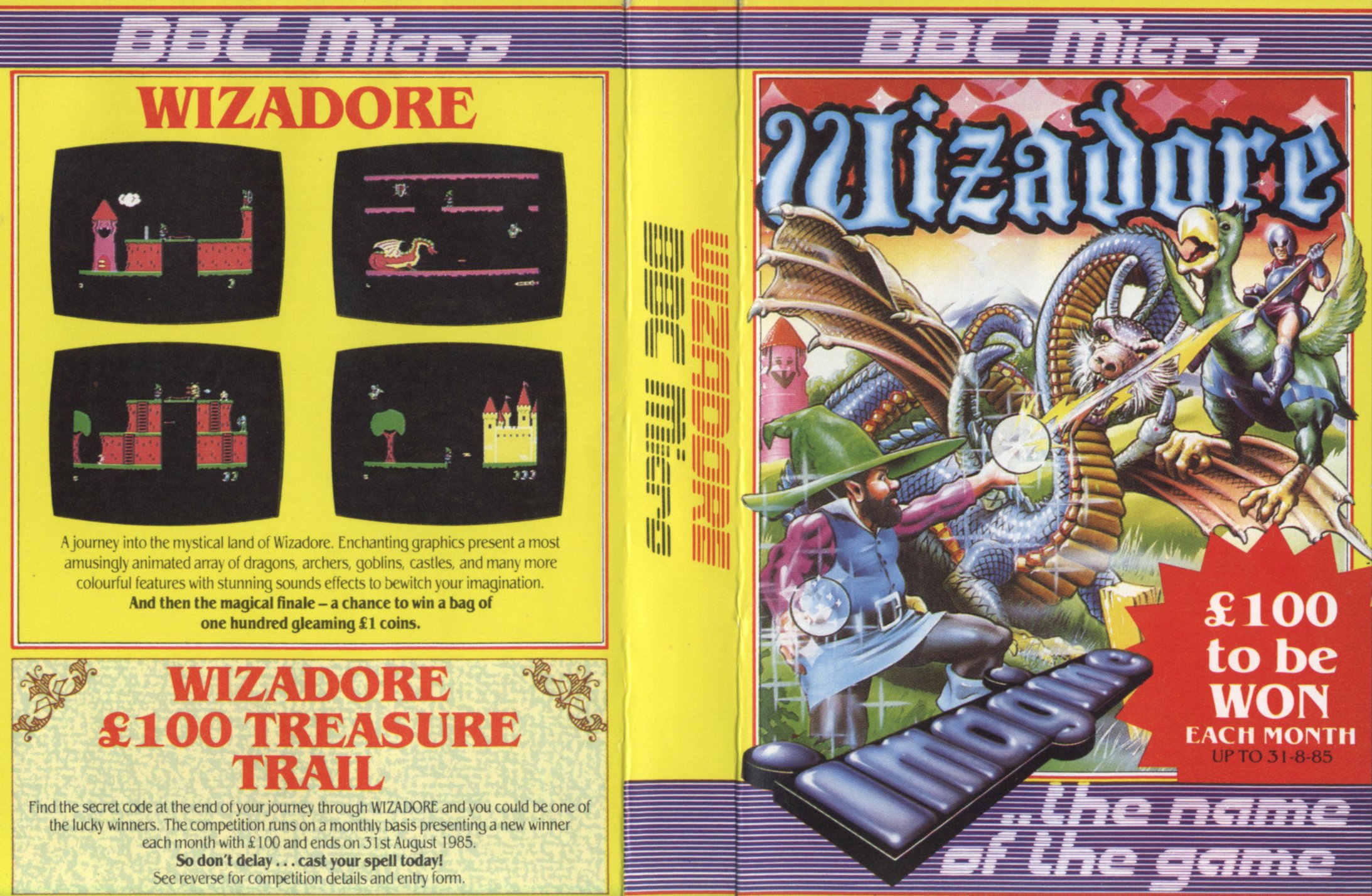
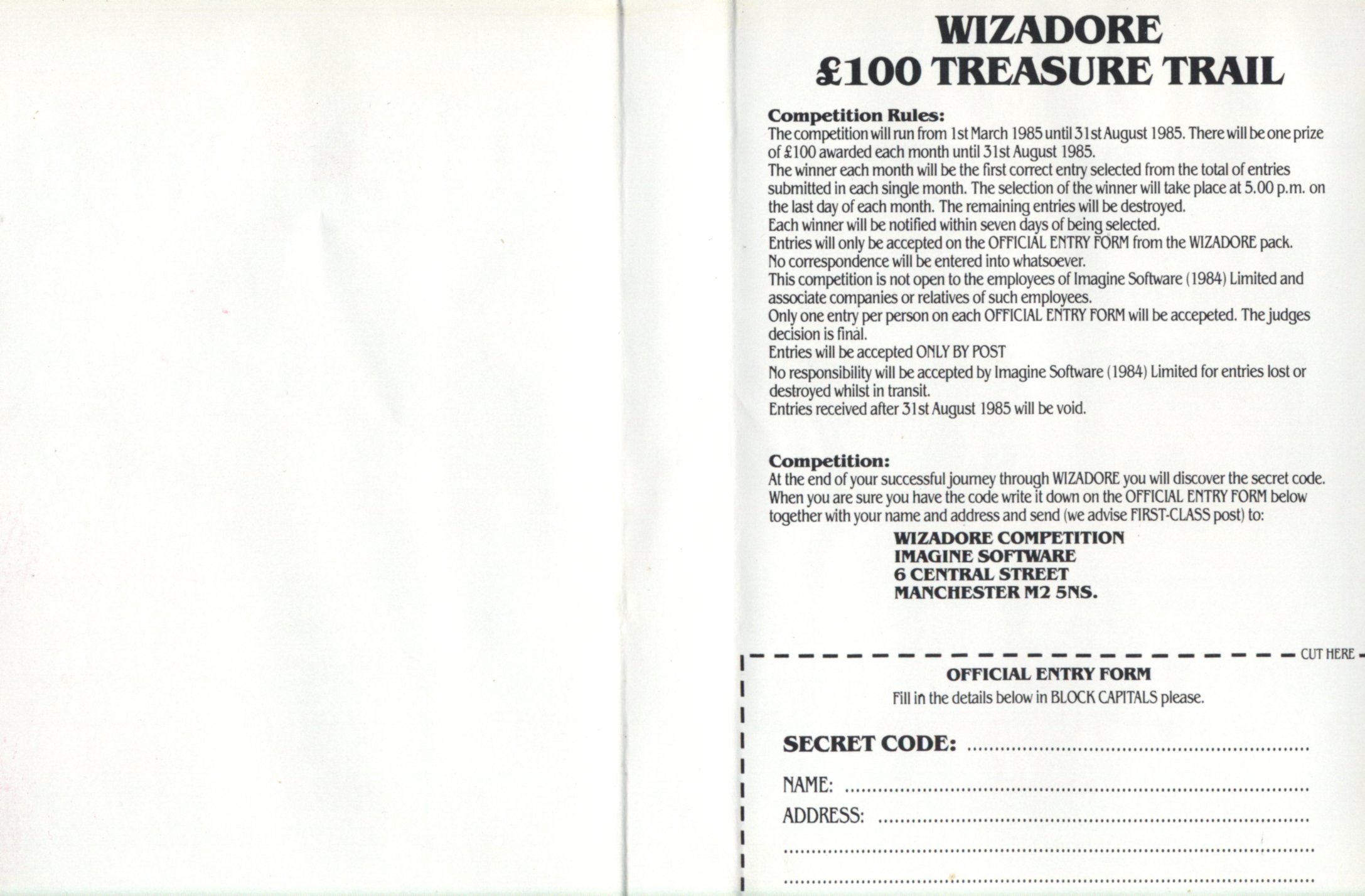
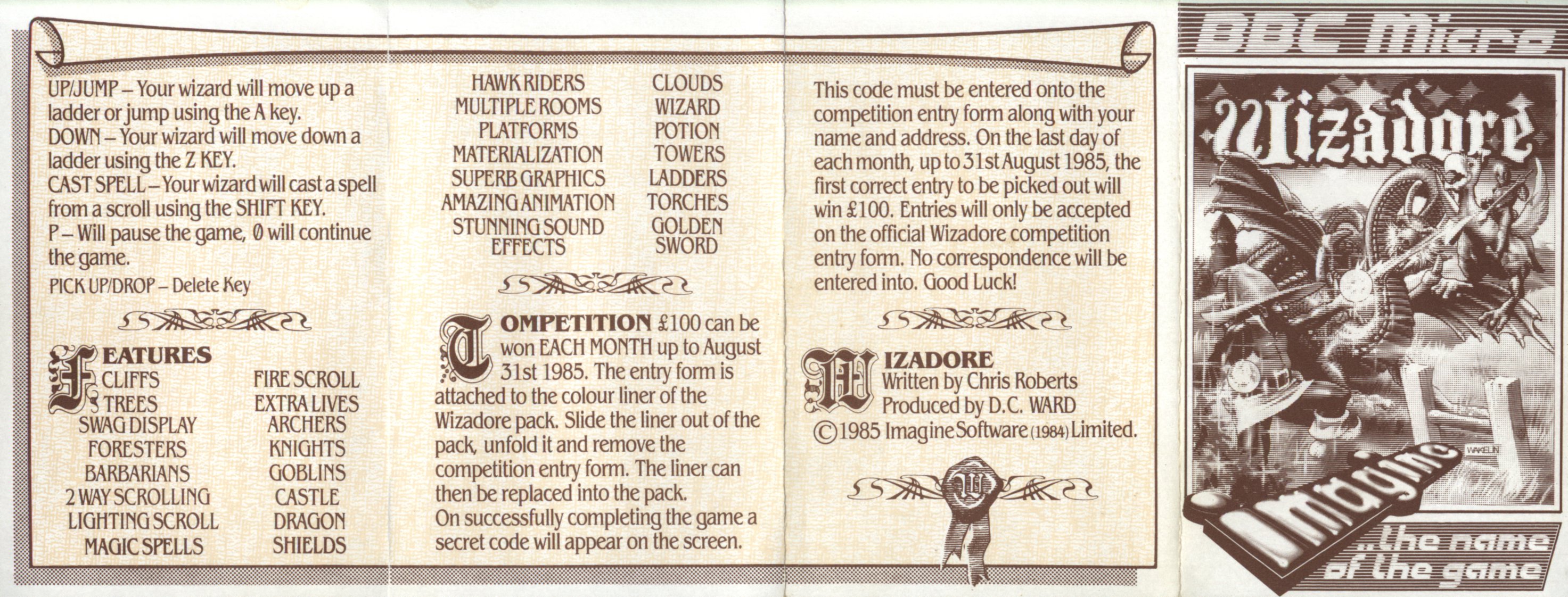
Wizadore offered entry into several monthly draws for £100 for anyone who could complete it. This wasn’t common but it was far from the first game to offer a real world prize. The example that springs to mind here was the game Pimania, which was originally published on the ZX81. The whole game was a series of cryptic clues, meant to give the time, date and location of somewhere to be to claim the one off prize. This was so obscure that it was years before anyone won it. I can’t imagine many people made it to the end of Wizadore without cheating either.

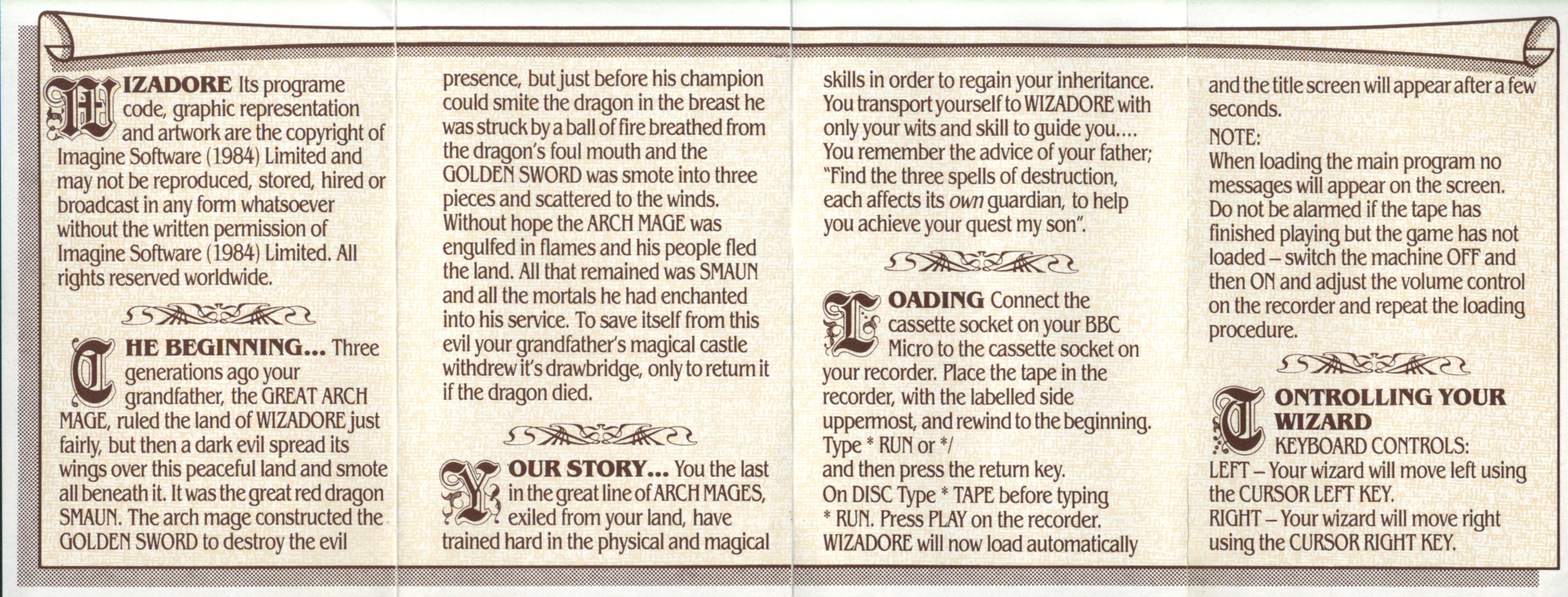
The game itself is a simple platformer with smooth horizontally scrolling screens and a 3 item inventory. Scans of the instructions are above but the basic idea is to get the 3 parts of the sword to kill the dragon. You don’t start with any offensive weaponry but there are 3 scrolls in the game which can be picked up and used to cast offensive spells. These spells each destroy a certain type of enemy, but the archers were all invulnerable as far as I could tell. There is a little flickering with the sprites, but the game runs extremely smoothly and it’s a long way from the Kong game a couple of years earlier.

Rather that the usual load of screenshots, I thought I’d do a longplay for this game and upload it to Youtube. I didn’t realise quite how difficult it was going to be when I started however. It’s fair to say that every single jump has to be pixel perfect. Even climbing ladders is difficult as the game uses the same key for up and jump. This can lead to all sorts of grief when trying to get on or off a ladder quickly. The main challenge is in jumping over arrows launched by the many archers, but if this can be mastered then the game is potentially completable with enough practice. For anyone wanting to give this a go, the first screen is a great example of just how hard this game is and getting the scroll requires a lot of practice.

The other challenge is in juggling inventory and navigating around the map. The world isn’t huge but because of the limited inventory plenty of backtracking is involved to fetch objects left behind. I nearly finished the game a couple of times only to discover I’d made it unwinnable by leaving something in the wrong place. The full playthrough is below. It won’t make for the most entertaining viewing at nearly 30 minutes but it does offer an easy way to see the ending.

The ending of the game isn’t much reward for all the effort, although I don’t expect many people ever saw it. It would have been nice to see the dragon fall over or something but it does at least have an ending which puts it ahead of most games of the era. I did enjoy the journey to get there, although I’m glad to have the modern option of savestates.

Not having owned a BBC back in the day, I’ve little basis for judging the game but comparing it to Spectrum platformers of the time it’s not as much fun as Manic Miner and nowhere near Jet Set Willy. Having said that, neither of those games had smooth scrolling and this was a great effort for a 16 year old publishing his first game. I can easily see that I would have spent ages on it back in the day if I’d gone for a BBC instead of a Spectrum. It’s a game that appears to be fondly remembered among those who played it back then but from what I’ve heard, Strykers Run is Roberts’ real classic from his pre-Origin days. Before I get to that, I’ll have a look at Match Day next which was his second published game on the BBC.

TOP

Inside King Kong

Loaf got confirmation about the King Kong game being Chris Roberts’ first, straight from the horse’s (or possibly gorilla’s) mouth yesterday. I’ve got a couple of follow up articles on it from Micro User.

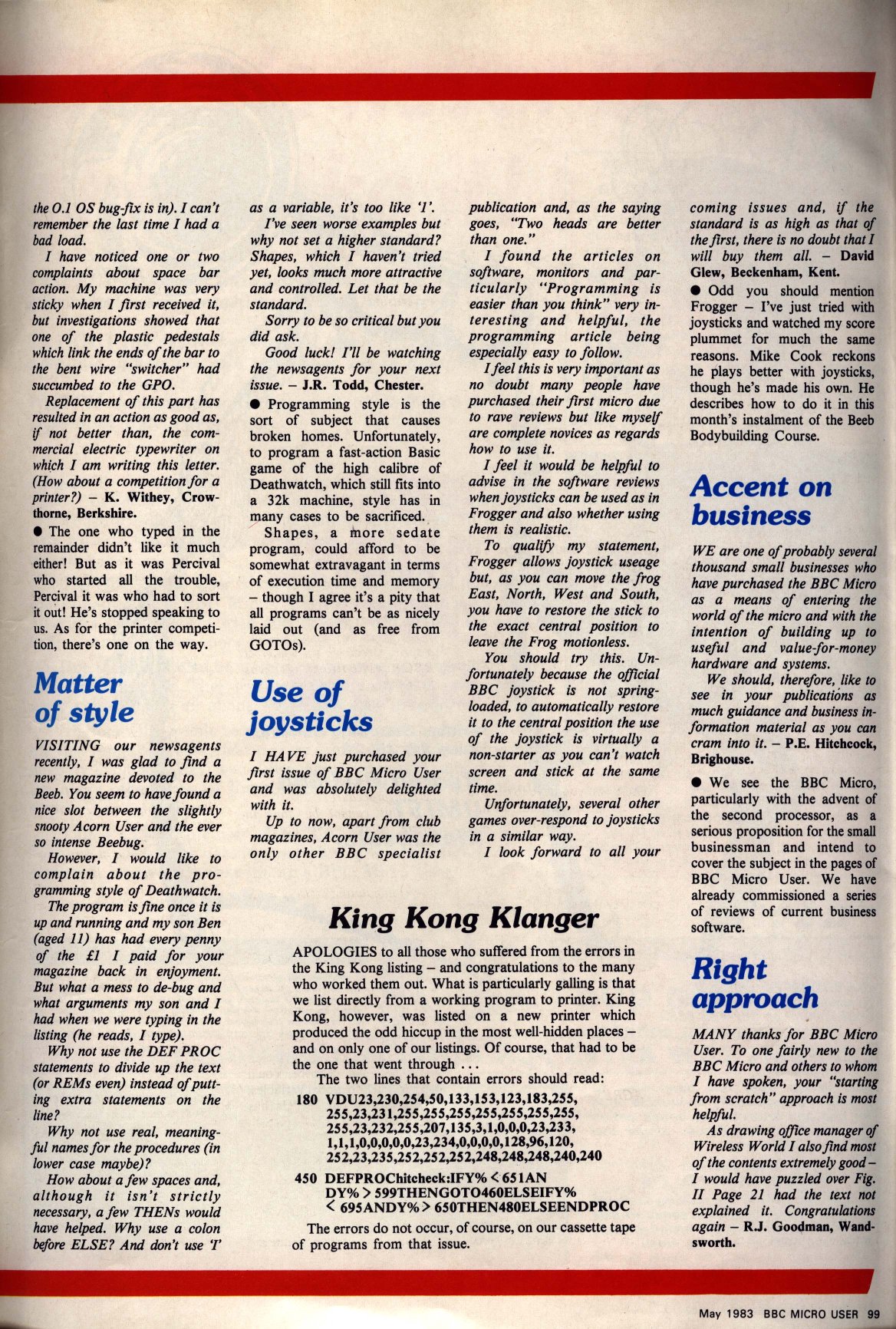
First off the program listing had errors in it. Anyone old enough to remember typing in games from magazines won’t be surprised by this as you always ended up having to fix something. It was one of the ways you couldn’t help but pick up a bit of programming knowledge if you owned any of the home computers in the early 80′s. The correction is below:-

KingKongKlanger

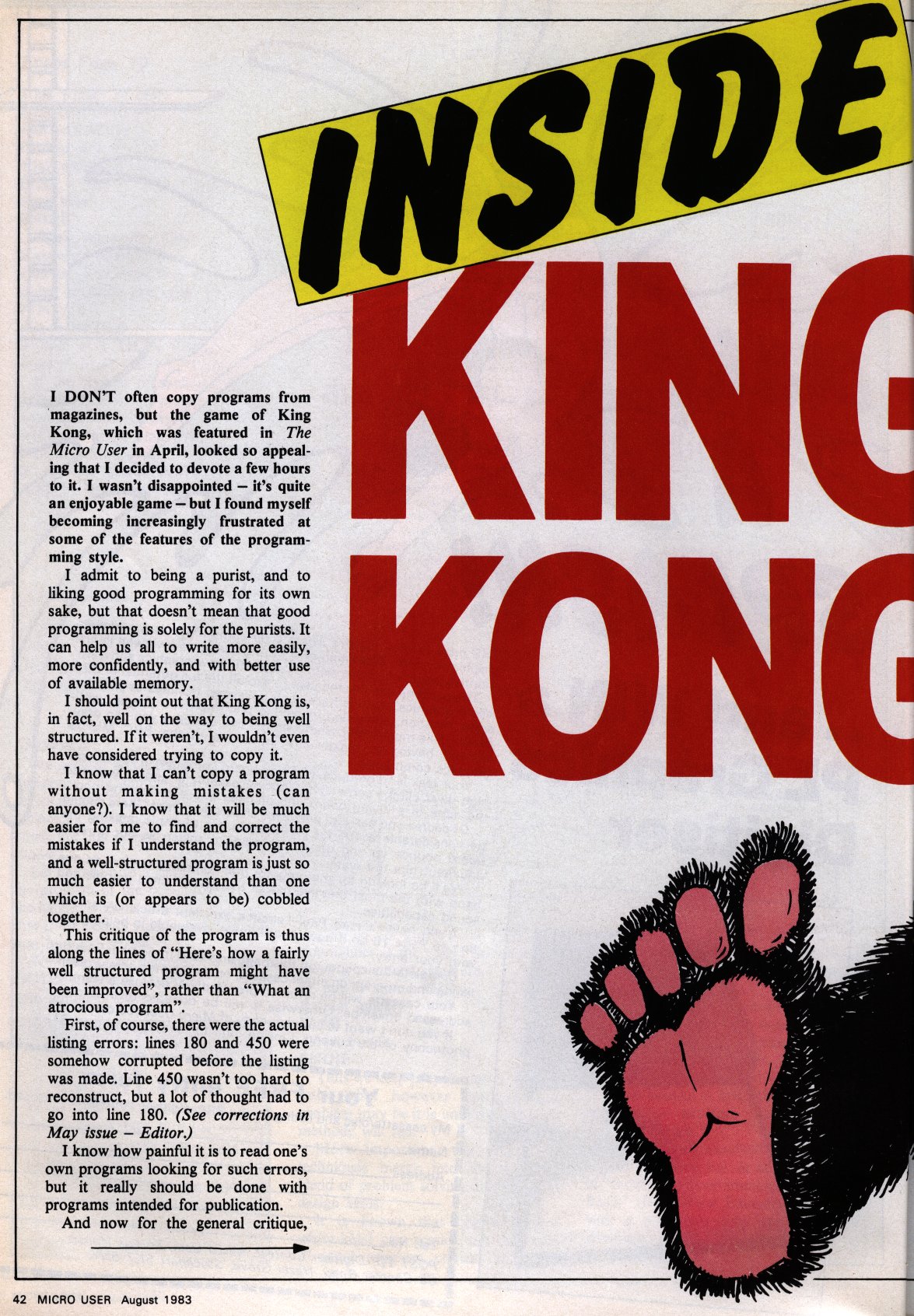
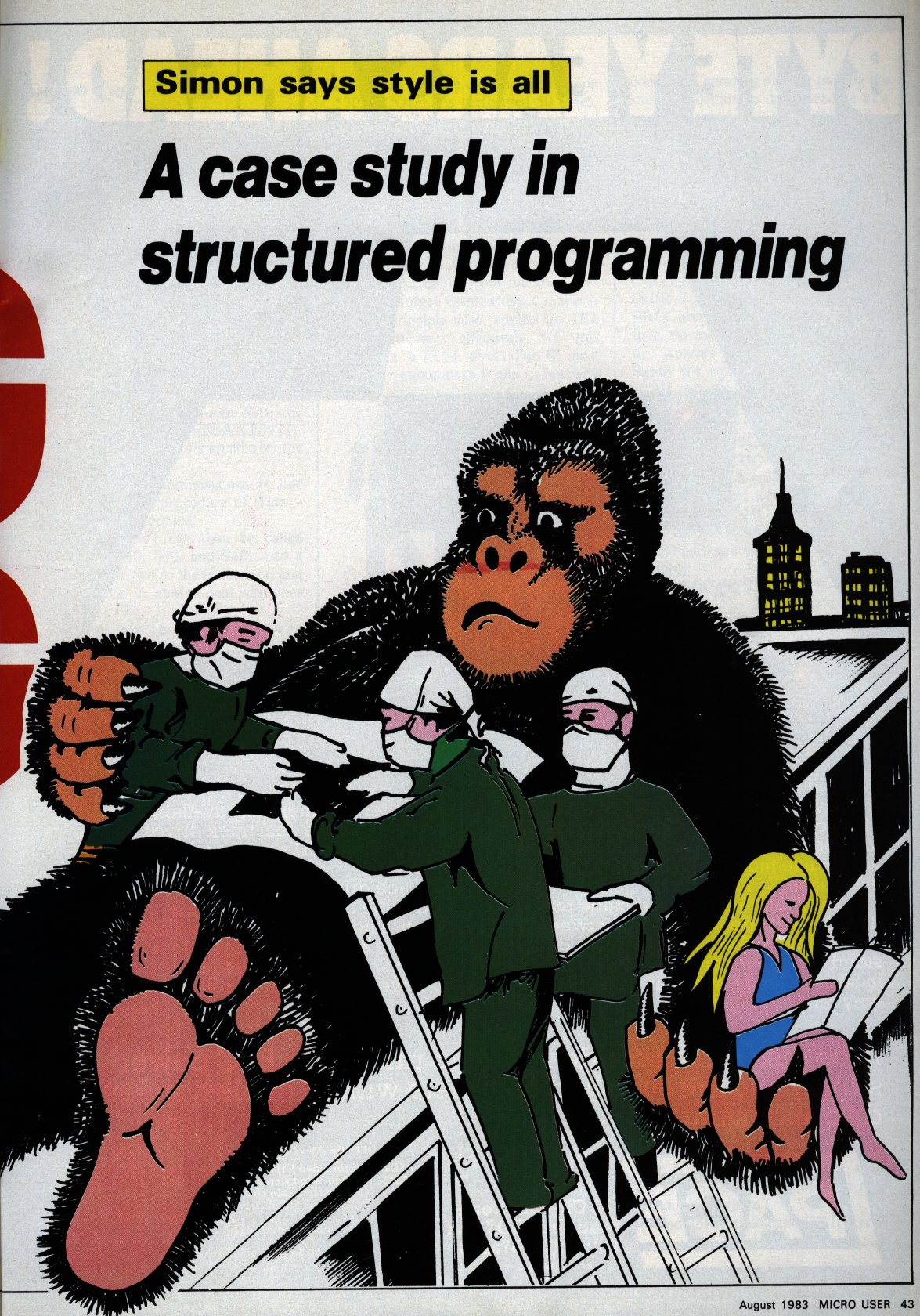
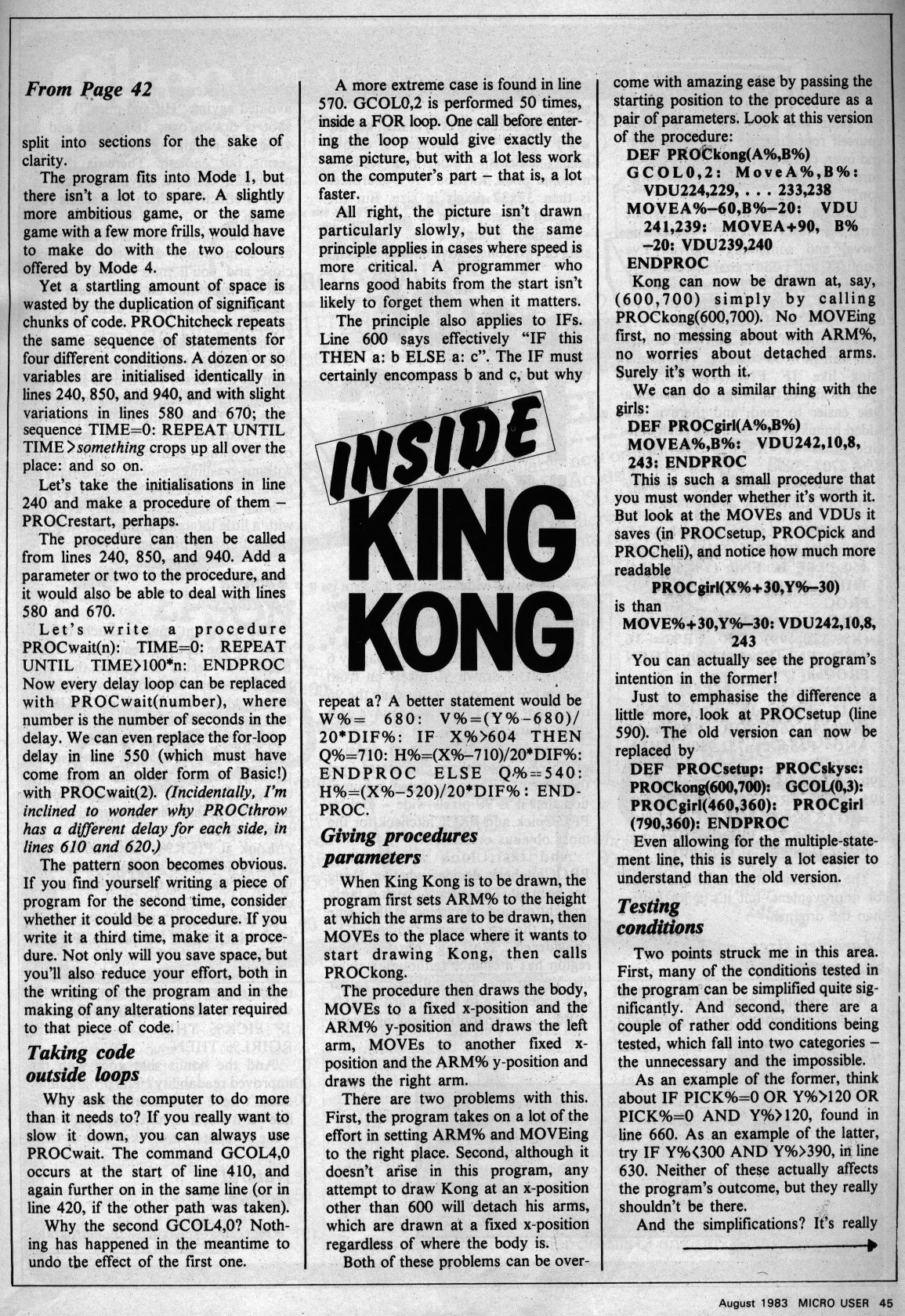
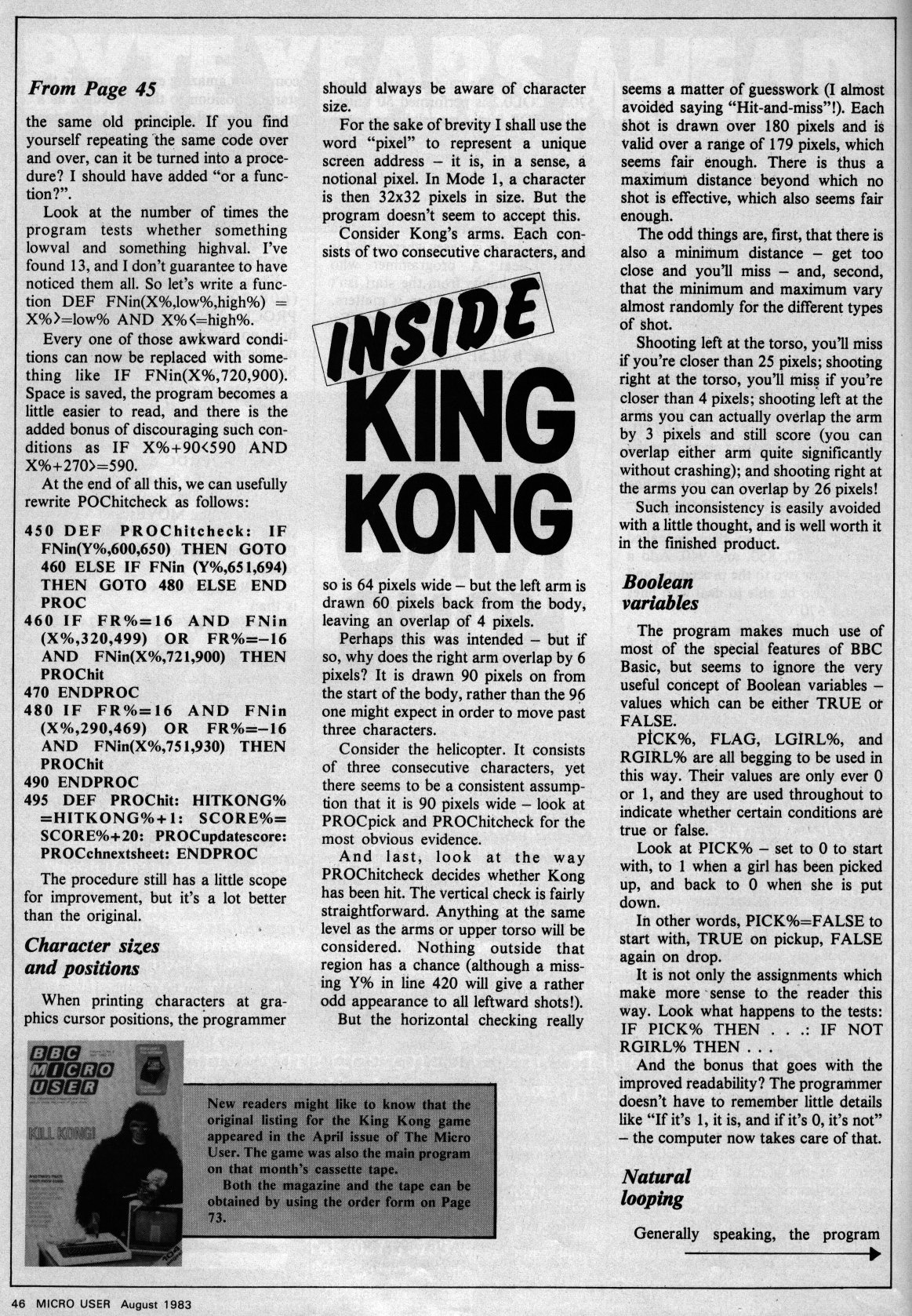
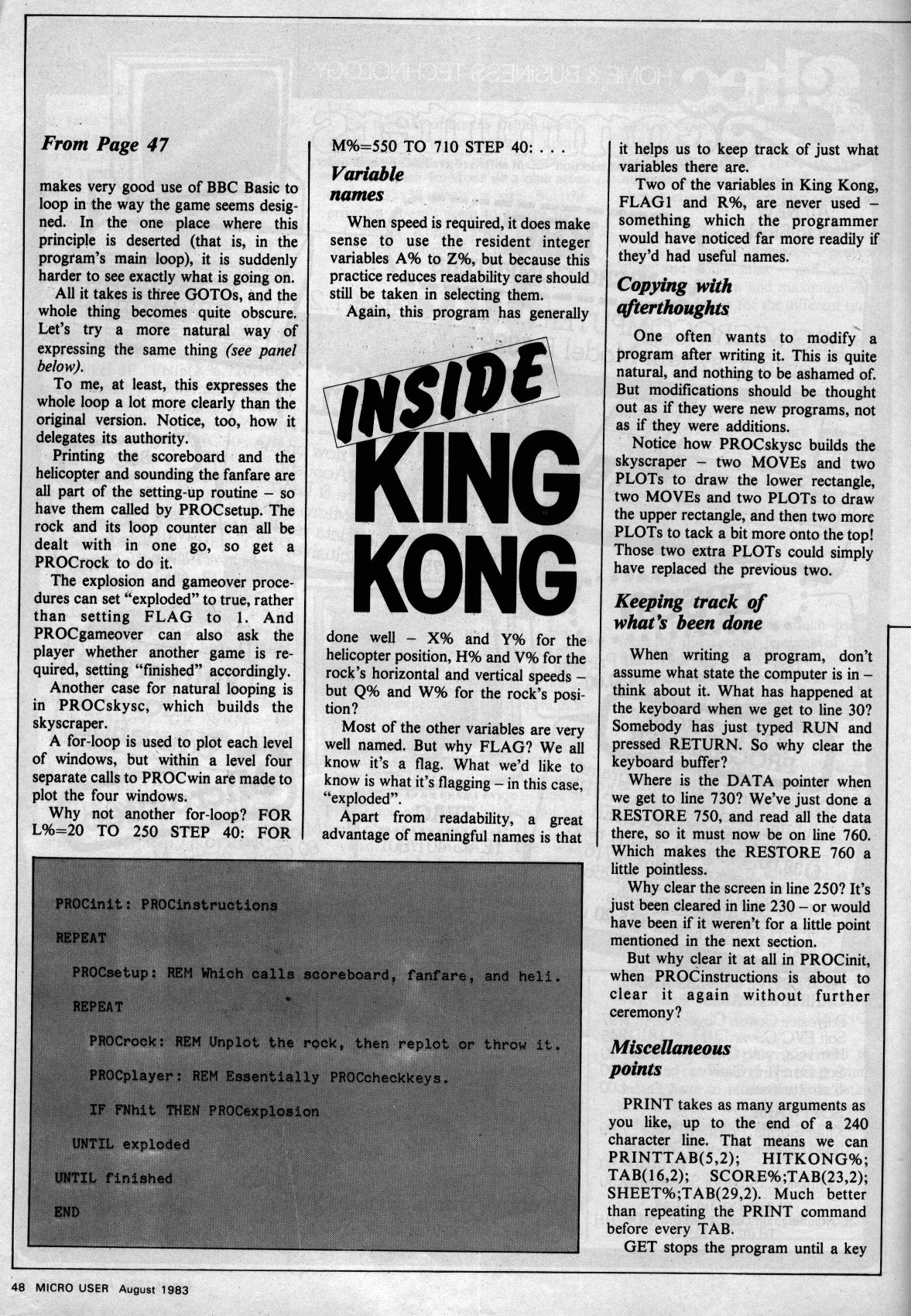
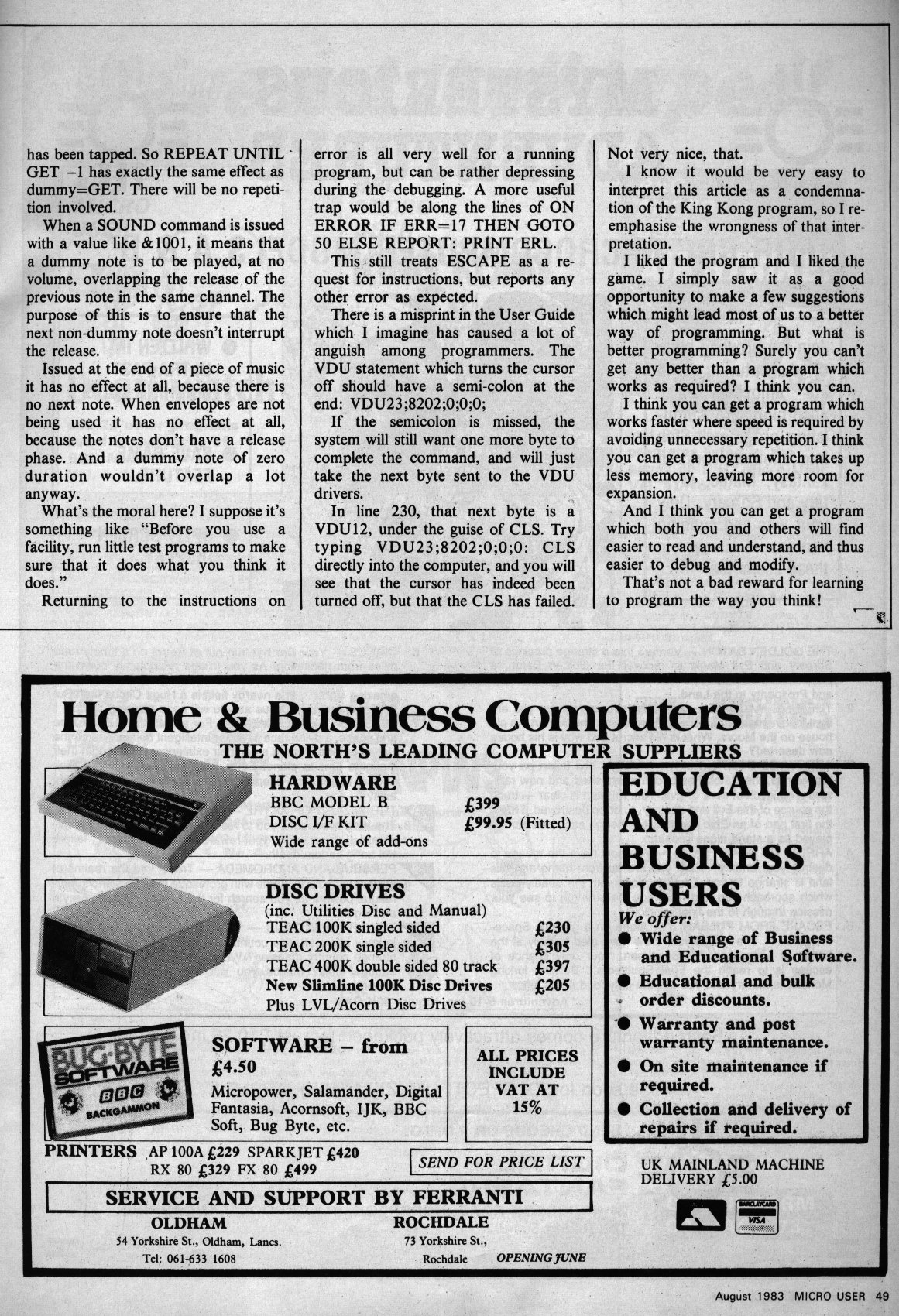
No one actually asked for it, but I’m posting the follow up article on the King Kong game also. This is from Micro User’s August 1983 edition. In it the code from King Kong is analysed and critiqued for all the ways it could be improved.

InsideKingKong1 InsideKingKong2

InsideKingKong3 InsideKingKong4

InsideKingKong5 InsideKingKong6

TOP

King Kong – Chris Roberts First Game?

KingKongScans1

Before he joined Origin and became famous for Wing Commander, Chris Roberts was a programmer over here in the UK releasing a couple of original games for the BBC and C64 and he also did a port of a football game.

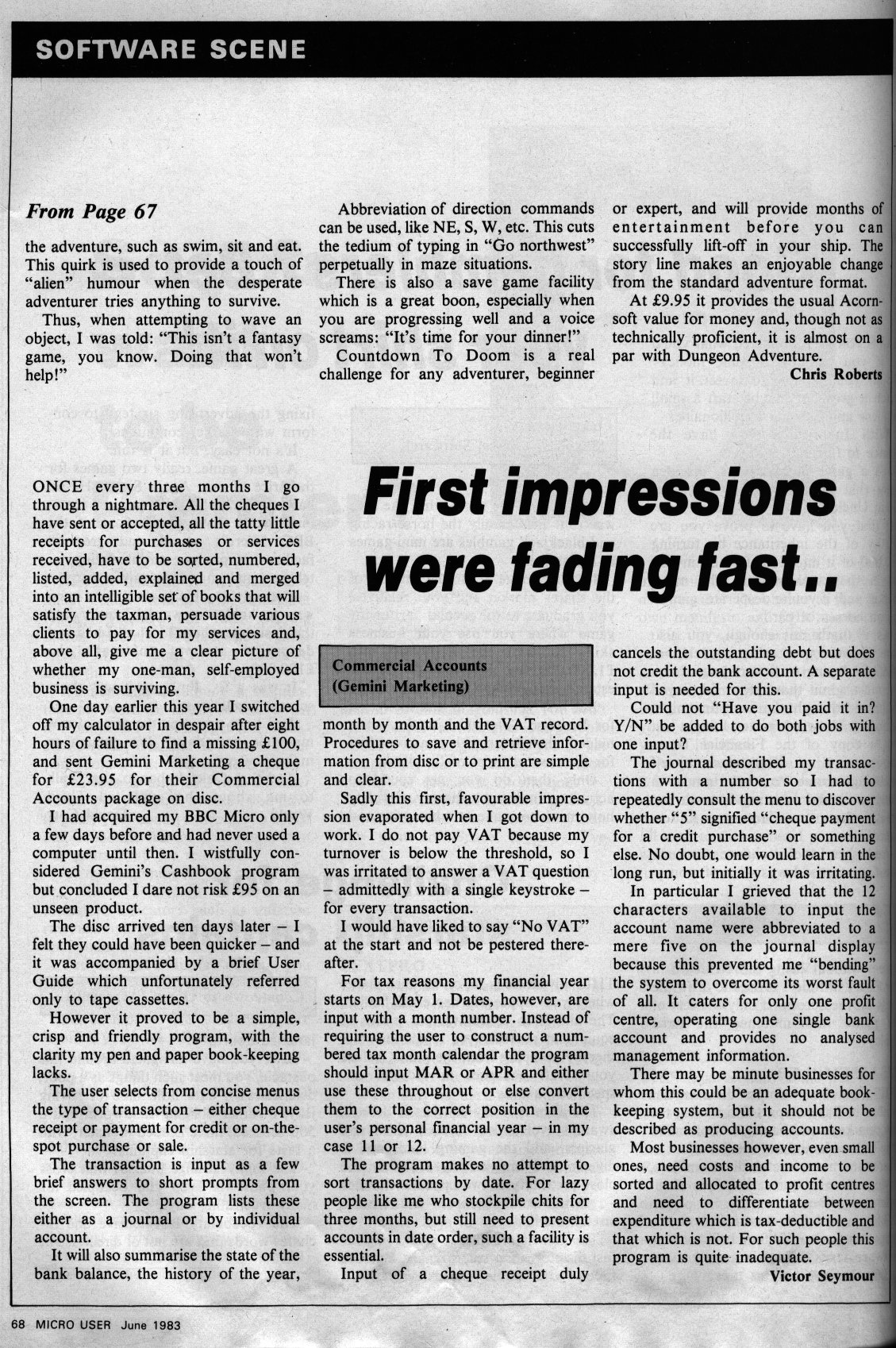
Before any of this however, he wrote a couple of games in BBC Basic which were published in Micro User magazine for which he got paid £200 each. I found some copies of the magazine so I thought I’d see if I could track these games down. His first game is described as being based on King Kong in the biography at the back of the Wing Commander 3 guide, so I have to assume this is it from Issue 2 of Micro User (April 1983). I can’t be 100% certain but it’s the only King Kong game from the magazine that year so it looks more than likely. In every other one of these magazines the author either gets mentioned or has his name in the code listing but there is nothing to say who wrote this one.

This magazine comes from the days where you were expected to type the program in for yourself from a listing. For extra money you could order a tape however and you can download the tape image from here and run it in a BBC emulator. The magazine scans are below:-

KingKongScans2 KingKongScans3

KingKongScans4

A few issues later there was actually a critique of the programming used in the game by one of the magazine authors which went on for numerous pages about how it could have been done better. I’ll post it if anyone is interested but as for the game itself, I have of course fired it up in an emulator to see what it plays like.

The instructions are built into the game. In short you have to fly a helicopter around rescuing some damsels in distress and then shoot King Kong 40 times.

The game has a short bit of music in true 80′s arcade style which plays each time you start a new life. King Kong throws white blobs of some description at me constantly which I have to avoid while air lifting out the two women stuck on the side of the Empire State building. In this first level there isn’t much range to the blobs and I can rescue the women safely as long as I don’t fly too near to King Kong.

The real difficulty here is the controls which are just horrible. The problem is that you don’t simply move left and right in the helicopter but have a thrust key and another to turn it around. The number of times I pressed the wrong key and smacked straight into the building was just ridiculous. The keys may have made more sense on a BBC keyboard layout but I did start to get used to them after several attempts. Another thing to note is that you can only use one key at a time so can’t fly diagonally.

Once the women have been saved, I have to shoot King Kong repeatedly. This is a case of getting in range of his arm and bobbing up and down avoiding the blobs while firing. There is a lot of slowdown when firing the machine gun which makes this easier. There is a Donkey Kong reference at the end of the level before the colour changes and level 2 starts.

The 2nd level is more of the same except it speeds up dramatically and Kong’s blobs have a much longer range resulting in my dying within a second of starting it. I don’t know if it is a problem with the emulation but it would be a serious challenge to last more than a few seconds and I left it here.

For a game written in BASIC, not to mention a first attempt at game writing, this isn’t bad actually. Roberts was only 14 when this was published and he went on from this to have his first machine language game (Wizadore) published and topping the games charts within 2 years. I’ve not been able to track down the other BASIC language game (Popeye) mentioned in the WC3 guide unfortunately but if anyone has it I’d be curious to give it a go.